Network cable Crimping and Testing Tools
This tutorial explains the most common twisted-pair network cable testing and crimping tools in detail. Learn the tools that you can use to crimp and test twisted-pair network cables.
Cables are the backbone of a wired network. The stability, reliability, and performance of a wired network depend on cables. Installing and maintaining cables in a wired network is a difficult task.
To make this task easier, a variety of network cable crimping and testing tools are available. In this tutorial, we will not only discuss some of the most common network cable crimping and testing tools but also understand their features and functions.
Twisted-pair (STP and UTP) network cable crimping tools
Crimping tools are used for the following purposes.
- To cut the network cable of the required length from the bundle.
- To remove the outer and inner jackets of the network cable.
- To attach the connectors on both ends of the cable.
Some crimping tools provide all the functionality while others provide one or two functionalities. The most common twisted-pair network cable crimping tools are described below.
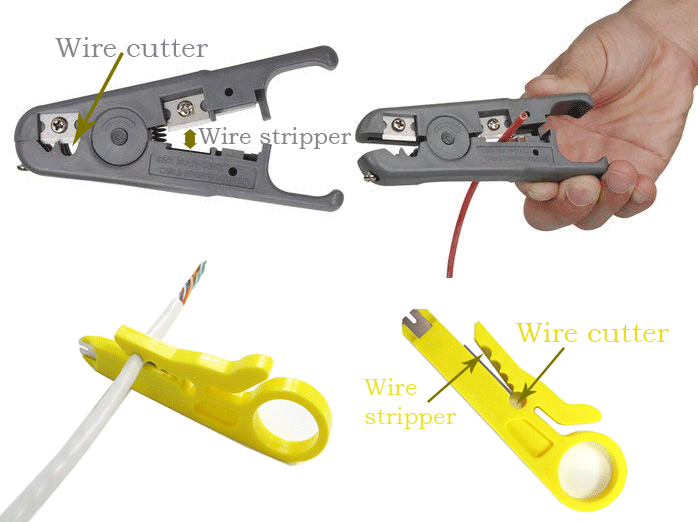
Wire Cutter: - To cut the network cable of the required length from the bundle, you can use any standard wire cutter tool or can use a wire cutter tool that is specially designed for the twisted-pair cable. A twisted-pair wire cutter usually includes additional blades for stripping the wire.
Wire Stripper: - This tool is used to remove the outer and inner jackets of the network cable. Typically, you do not need to purchase this tool separately as all standard twisted-pair wire cutters are equipped with wire-strippers.
The following image shows two twisted-pair wire cutter tools equipped with wire-strippers.
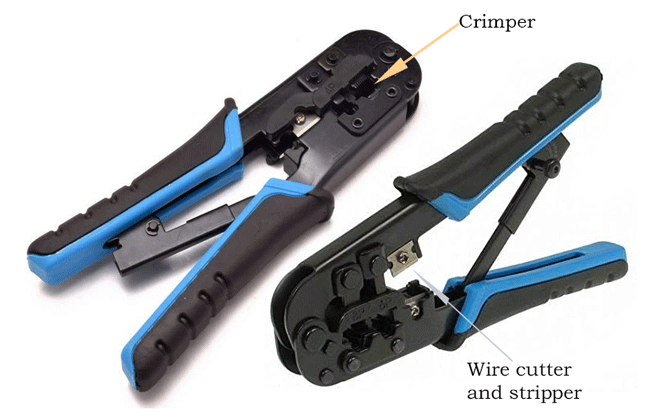
Crimp tool: - This tool is used to attach the connectors to the cable. Typically, this tool also includes a wire-cutter and wire-stripper. So if you buy a crimp tool, you don't have to buy a wire-cutter and wire-stripper separately.
The following image shows a crimping device equipped with a wire-stripper and wire-cutter.
Which tool you should buy depends on your requirements and budget. For example, if you want to install a dozen network cables, you can buy less expensive tools such as a low-cost wire stripper and a cheap crimp device. But if you are in a network cable setting-up business or have a medium or large-sized network, you should buy a crimping tool that has a built-in wire stripper and wire cutter. A high-quality twisted-pair cable crimping tool will cost you around $100 but will save you many headaches in the long run.
Network cable testing and troubleshooting tools
A network cable testing and troubleshooting tool is used for the following purposes.
- To measure the length of a segment or network cable.
- To detect loose connectors.
- To identify an un-labeled network cable from all network cables.
- To find a break in the network cable.
- To certify the cable installation.
The following section describes the most common network cable testing and troubleshooting tools.
Cable certifier
This device thoroughly tests a network cable and certifies that the cable installation meets a special wiring standard such as Cat 5e, Cat 6, Cat 6a, and so on. This device can check and test total segment length, crosstalk, noise, wiremap, resistance, impedance, and the capability to transfer data at the maximum frequency rated for the cable.
The following image shows a network cable certifier.
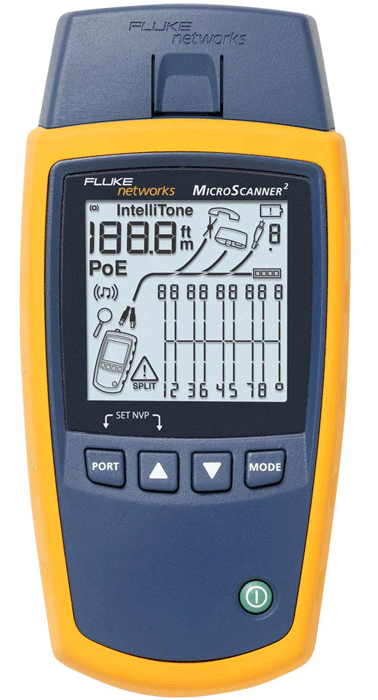
Since this device performs a complete test and certifies the cable installation, it will cost you more than all the other test devices listed in this section. If you have a mid-size network or if you can buy this device, then you should always buy and use this device to manage network cables.
Basic cable tester
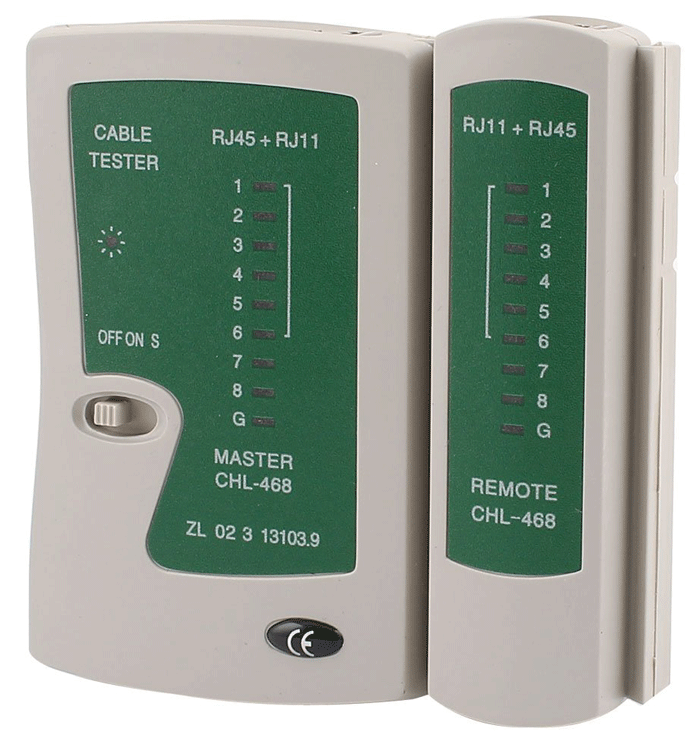
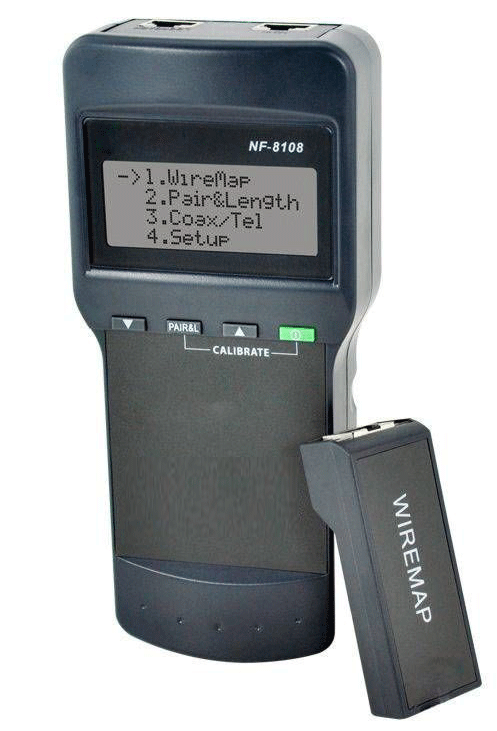
If you can't afford a network cable certifier, you can buy and use this device to manage your network cables. Besides certifying the cable installation, this device provides all remaining functionalities of a network cable certifier. It can test cable length, cross talk, and breaks in the cable. It can also check whether the connectors on both ends of a network cable are properly attached or not.
The following image shows a basic network cable tester tool.
Tone generator and the probe
This device is used to trace the unlabeled network cables. This device comes in two pieces: the tone generator and the probe. The tone generator generates tones or signals and places them on the network cable. The probe detects these signals on the other end of the cable.
You can use this tool to identify network cables that run from a central location to remote locations. For example, if you are working on a patch-panel or a switch and trying to figure out which network cable connects back to an end-device (such as a PC), then you can use this device.
Place a tone generator at one end of the connection (end-device), and use the probe on another side (switch or patch-panel) to determine which network cable the tone generator is connected to.
The following image shows an example of a tone generator and probe.

Time domain reflectometer
This device is used to measure the length of a network cable as well as the breaks in the cable. This device transmits a signal on one end and measures the time that the signal takes to reach the end of the cable. You can also use this device to find breaks in the cable. For example, this device can tell you approximately how far the break is located in the cable.
The following image shows a time domain reflectometer.
That’s all for this tutorial. If you like this tutorial, please don’t forget to share it with friends through your favorite social network.
Author Laxmi Goswami Updated on 2026-01-22